Research · Article
From Experience to Alignment: The System Dynamics Edge
Why alignment on mental models matters more than shared experience-and how simulation turns assumptions into testable insight.
From Experience to Alignment: The System Dynamics Edge
Experiential learning-learning by doing-is the gold standard for modern management. But experience alone is a fickle teacher. Two leaders can live through the same market collapse and walk away with opposite, and equally incorrect, conclusions.
The problem is not the experience; it is the Mental Model-the invisible map we use to navigate complexity.
The Invisible Barrier
In most organizations, decision-making is driven by these implicit maps. Because they are never written down, teams often align on goals (where we want to go) while remaining fundamentally misaligned on mechanics (how the engine actually works).
This gap leads to talking past each other and recurring unintended consequences.
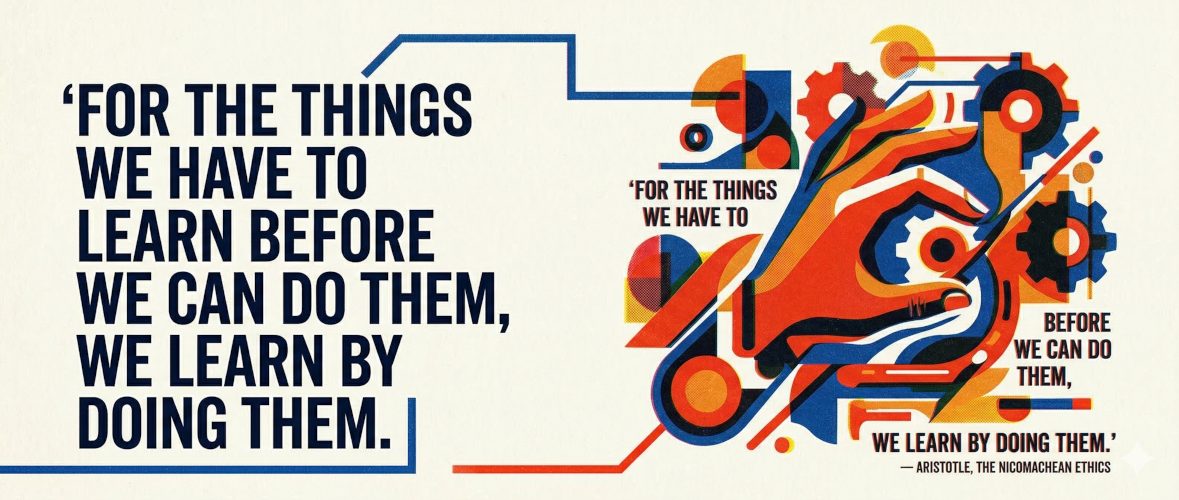
“For the things we have to learn before we can do them, we learn by doing them.”
— Aristotle, The Nicomachean Ethics
Making Thinking Visible
System Dynamics (SD) solves this by externalizing the map. Instead of debating opinions, SD asks teams to map the structure of their reality:
- Stocks: What is accumulating (capital, burnout, technical debt)?
- Flows: What is the rate of change?
- Feedback Loops: Where do our actions reinforce or balance the system?
From Opinion to Simulation
The true aha moment happens when these models are simulated. When a team's stated assumptions produce a result in a model that contradicts their intuition, it creates productive tension.
We move from asking Who is right? to What structure produced this behavior?
The Innovation Payoff
By shifting from individual intuition to shared, testable models, organizations gain:
- Strategic Alignment: Not just on the what, but the how.
- Evidence-Based Reflection: Grounding disagreements in structure, not ego.
- Visible Logic: Closing the gap between experience and actionable insight.
The Bottom Line: Real leverage in innovation is not found in more data or more experience-it is found in aligning the mental models that interpret them.
Apply This in Class
Bring systems thinking to your students
Explore how educators are using simulation-driven learning to help students reason through complex, real-world decisions.