Research · Article
Designing Scalable, Replayable ETL for Modern Enterprises
How to build decision-ready data architecture that powers analytics, simulation, and AI across the business.
The Gap Between Operational Systems and Decision Intelligence
Enterprise Resource Planning (ERP) systems remain the operational backbone of modern organizations. They capture transactions, enforce business rules, and maintain the authoritative record of what happened across finance, operations, supply chain, and human resources.
But ERP systems are not designed for large-scale analytics, simulation, or advanceddecision intelligence. As organizations move toward hourly extracts, high-volume data integration, and near-real-time insight requirements, traditional stored-procedure ETL and warehouse-only architectures struggle to scale.
The result: decision-makers either wait too long for insights, work with stale data, or build fragile workarounds that break under load.
Why Traditional ETL Falls Short
Legacy ETL approaches were designed for a different era:
- Nightly batch jobs that assume decisions can wait until morning
- Stored procedures tightly coupled to database schemas
- Warehouse-centric designs that don't support reprocessing
- Hard-coded transformations that resist schema evolution
- Limited audit trails that make debugging and compliance difficult
These architectures work for static reporting. They break when organizations need:
- Hourly or sub-hourly data freshness
- Large-scale joins across millions of records
- Replayability for debugging, auditing, or reprocessing
- Schema evolution without breaking downstream consumers
- Support for simulation, forecasting, and optimization workloads
A Modern Data Architecture for Decision Intelligence
Modern architectures treat ERP systems as authoritative operational sources—not as analytics platforms. Transformation, history management, and analytics preparation move into a scalable data platform designed for these workloads.
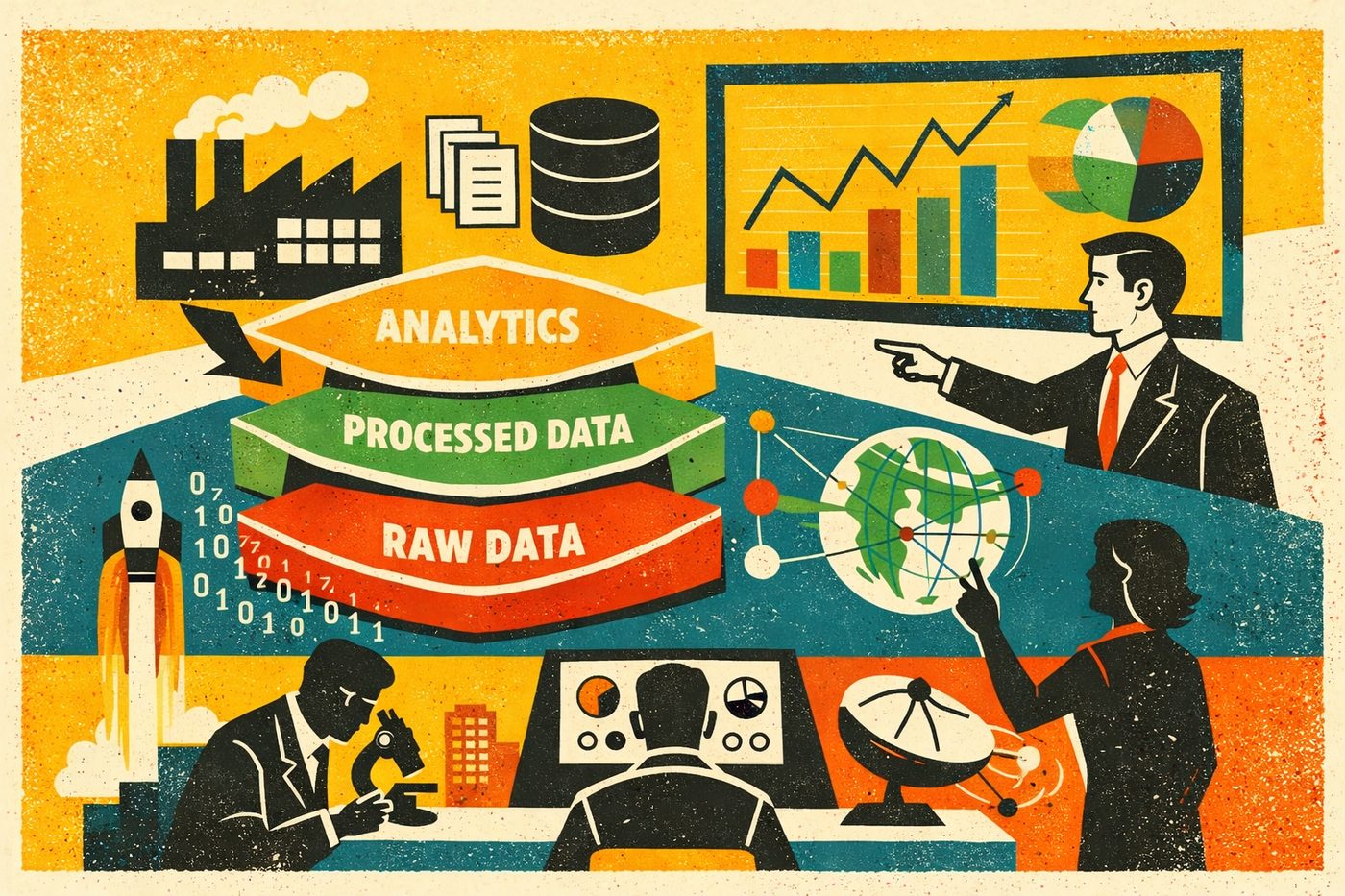
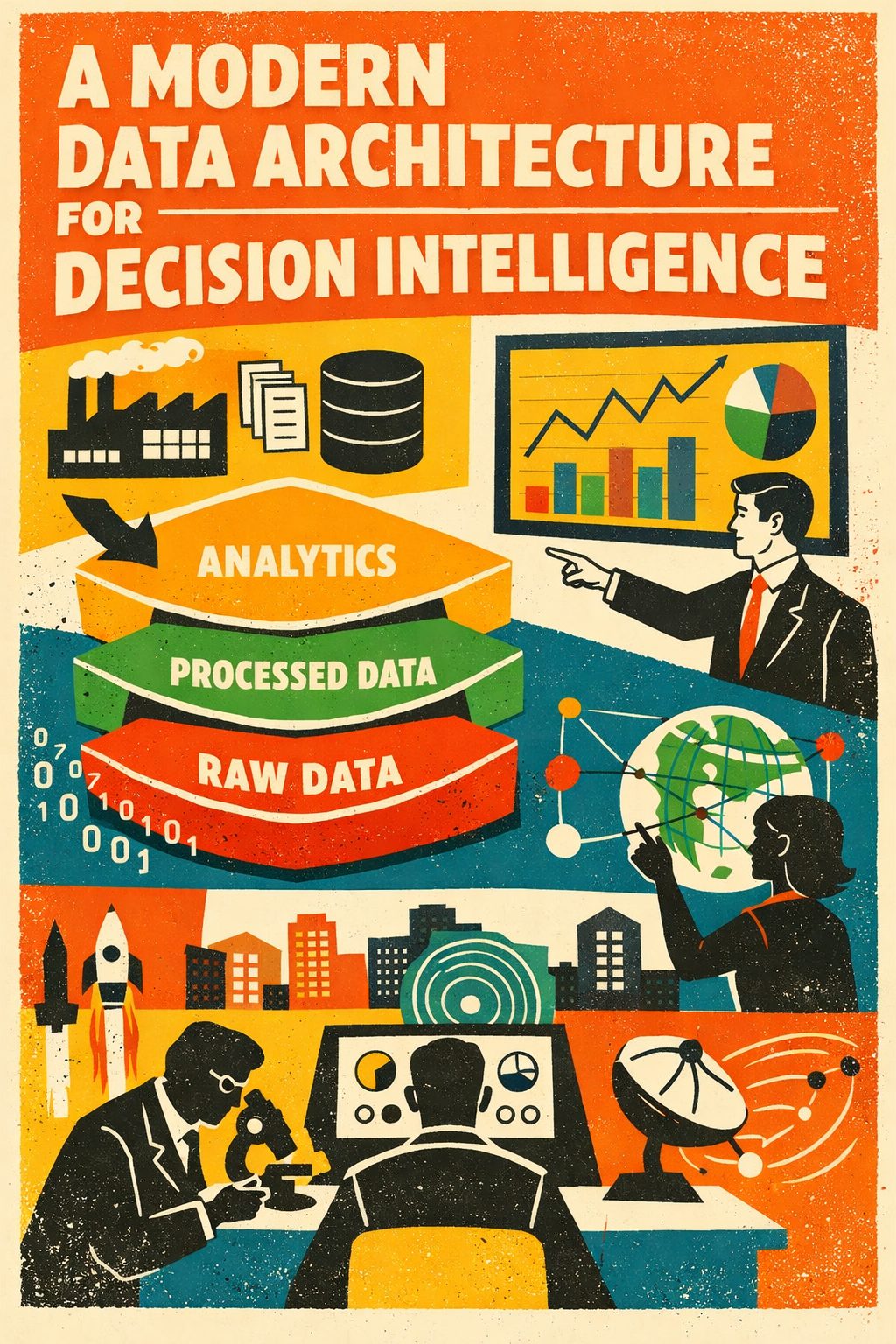
The architecture organizes data into three layers:
1. Raw Layer
Immutable, timestamped copies of source system extracts. Nothing is transformed or filtered. This layer provides full replayability—if business logic changes, you can reprocess from the original data without re-extracting from source systems.
2. Conformed Layer
Standardized schemas, deduplication, and cross-system entity resolution. Data from multiple ERP modules (and external sources) is aligned into consistent structures. Schema evolution is managed explicitly, with version tracking and backward compatibility.
3. Business-Ready Layer
Curated datasets optimized for specific use cases: financial reporting, operational dashboards, demand forecasting, simulation models, and AI training. Each dataset has clear ownership, documented lineage, and quality metrics.
Enabling Replayability and Auditability
One of the most underappreciated capabilities of modern data architecture is replayability. When transformation logic is decoupled from extraction, organizations can:
- Reprocess historical data when business rules change
- Debug data quality issues by replaying specific time ranges
- Satisfy audit requirements by reproducing any historical state
- Test new transformation logic against production data safely
- Support scenario analysis that requires alternative processing paths
This requires treating data as immutable and tracking transformation versions explicitly—a departure from traditional "update in place" warehouse patterns.
Scaling for Simulation and Advanced Analytics
Decision intelligence workloads differ fundamentally from reporting workloads:
- Simulation requires joining operational data with model parameters and running thousands of scenarios across historical patterns
- Forecasting requires time-series data with consistent granularity and complete history
- Optimization requires rapid iteration over large solution spaces with real-time feedback
- AI/ML training requires curated, labeled datasets with reproducible preprocessing
These workloads demand architectures that can scale horizontally, support complex joins efficiently, and provide consistent performance as data volumes grow.
From Static Reports to Decision-Ready Data Products
The shift is from building reports to building data products. A data product is:
- Self-describing: Schema, lineage, and quality metrics are embedded
- Versioned: Changes are tracked and reversible
- Contractual: Consumers know what to expect and when
- Monitored: Freshness, completeness, and accuracy are measured continuously
- Reusable: Multiple use cases share a single curated source
When data is treated as a product, organizations can build system models, run simulations, and power operational decisions from a trusted, consistent foundation.
Implementation Considerations
Moving to a modern data architecture requires addressing several practical challenges:
Incremental adoption: Organizations don't need to rebuild everything at once. Start with high-value use cases that suffer most from current limitations—often forecasting,supply chain visibility, or financial consolidation.
Source system constraints: ERP extract capabilities vary. Design extraction patterns that work within source system limitations while maximizing data freshness.
Organizational change: Data product thinking requires new roles and responsibilities. Data engineers, analytics engineers, and domain owners must collaborate differently than in traditional BI organizations.
Cost management: Cloud-native architectures enable scale but require attention to cost optimization. Design for efficiency from the start.
The End State
Organizations that invest in decision-ready data architecture gain:
- Faster time-to-insight across all analytics workloads
- Confidence in data quality and consistency
- Ability to support advanced use cases—simulation, AI, optimization—without rebuilding infrastructure
- Reduced technical debt and maintenance burden
- Foundation for continuous improvement as requirements evolve
The goal isn't just better reporting. It's data infrastructure that enables organizations to act on insight—quickly, confidently, and at scale.